Decoding British Military Acronyms: A Guide for Genealogy Researchers
For genealogy enthusiasts, military records are a goldmine of information. They often reveal service details, locations, ranks, and even personal anecdotes that breathe life into your family tree. However, navigating British military records can be challenging—especially with the myriad of acronyms used throughout history. Understanding these abbreviations can be crucial for accurate interpretation.
GENEALOGY RESEARCH
Laura Newheiser
2/24/20261 min read
Why Military Acronyms Matter in Genealogy
British military documents, from service records to medal rolls, frequently use abbreviations to save space. For example:
RA – Royal Artillery
RE – Royal Engineers
RFC – Royal Flying Corps
RAF – Royal Air Force
Pte – Private
L/Cpl – Lance Corporal
Cpl – Corporal
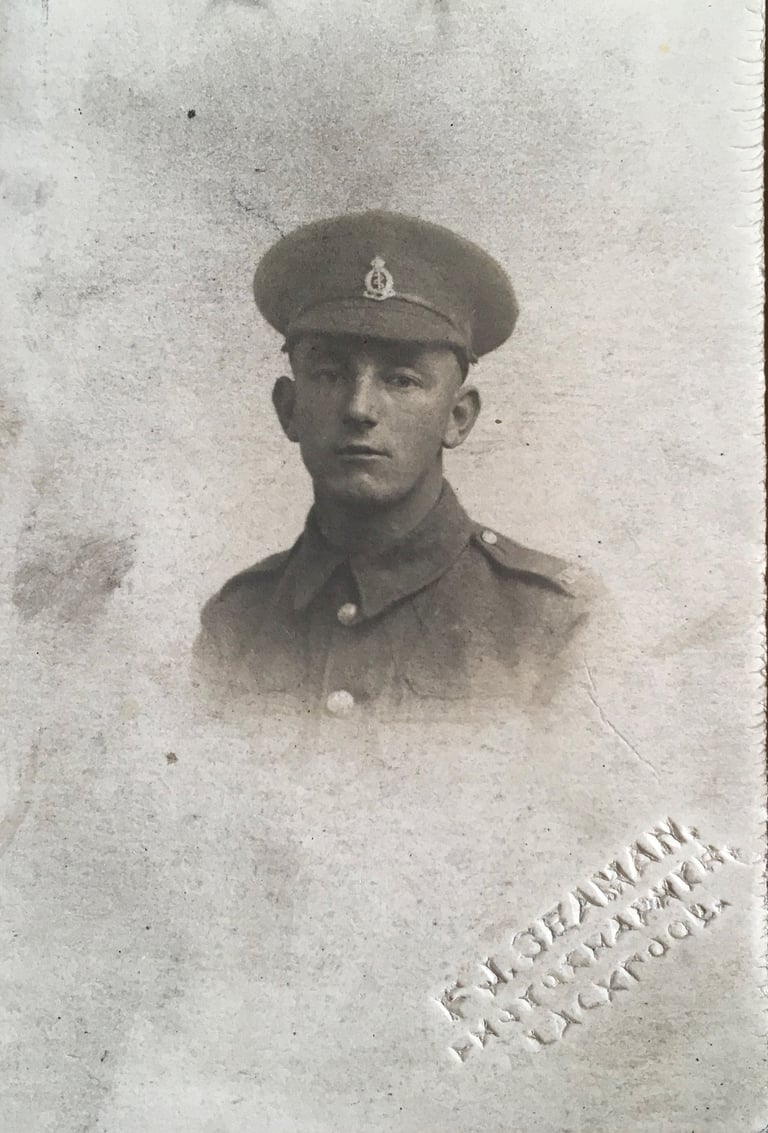
Without knowledge of these acronyms, a record noting “Pte J. Smith, RE, WWI” might confuse new researchers. But decoding it reveals that John Smith served as a Private in the Royal Engineers during the First World War.
Key Acronyms Across Conflicts
Different wars and periods had their own conventions. Here’s a snapshot:
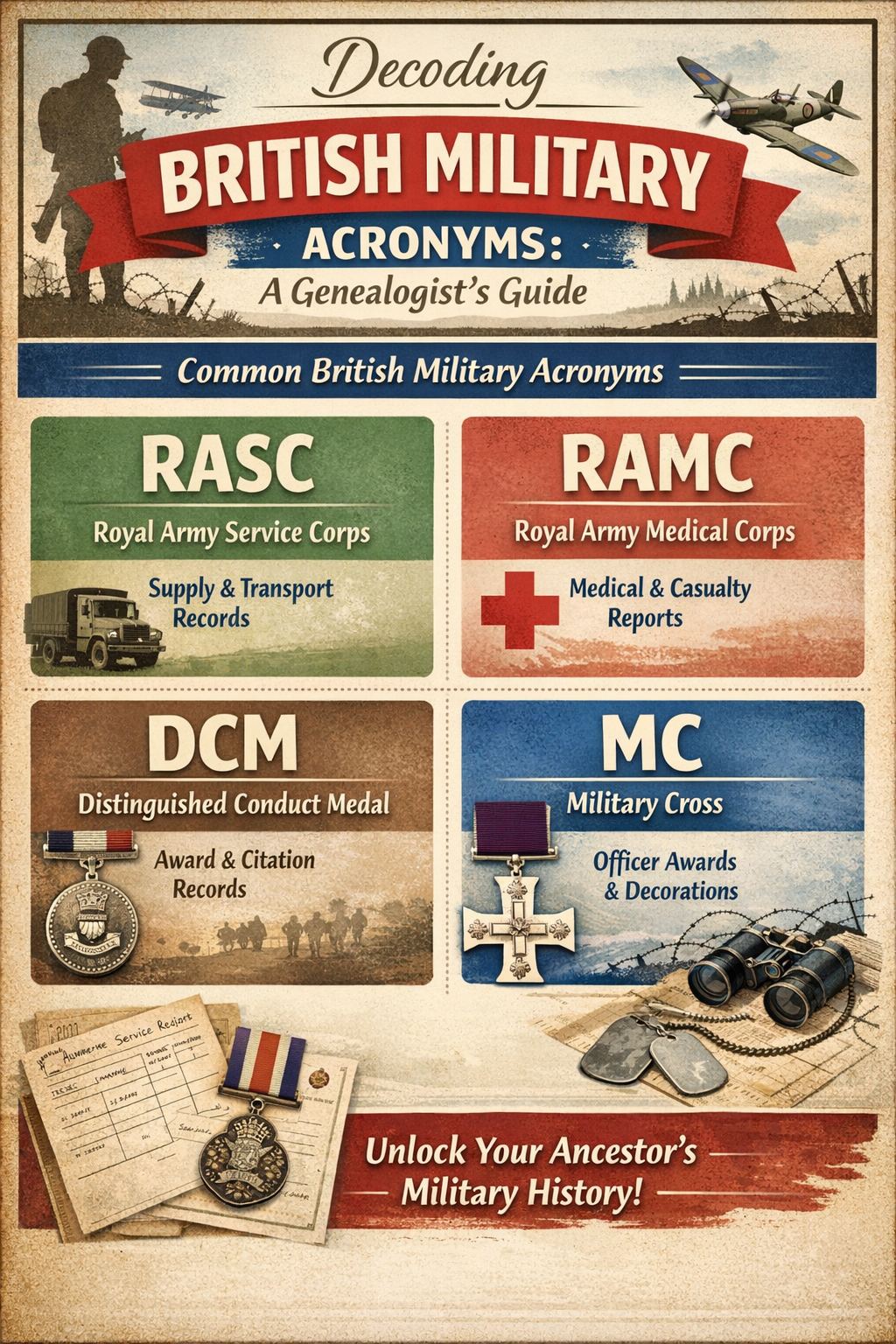
RASC = Royal Army Service Corps
RAMC = Royal Army Medical Corps
DCM = Distinguished Conduct Medal
MC = Military Cross
Recognizing these abbreviations allows genealogists to accurately track ancestors’ military roles, campaigns, and honors.
Tips for Using Military Records in Genealogy
Start with service numbers: Many records include a service number alongside rank and unit, which can help distinguish individuals with common names.
Use specialized archives: The National Archives (UK) and local regimental museums often maintain detailed guides on acronyms.
Cross-reference medals and honors: Decorations like the DCM or MC often come with citations that provide personal stories, locations, and dates.
Don’t overlook abbreviations in correspondence: Letters, enlistment papers, and pension records are rich with abbreviations, including lesser-known ones like O.C. (Officer Commanding) or Sjt (Sergeant).
Bringing Your Ancestors’ Stories to Life
Once acronyms are decoded, the real reward begins: connecting dates, campaigns, and personal details to your family history. For instance, finding that an ancestor served in the RFC can open avenues to aviation logs, squadron histories, and even photographs preserved in military archives.
Genealogy is not just about names and dates—it’s about uncovering stories. Understanding British military acronyms transforms a terse record into a narrative of courage, duty, and personal legacy.